
 EN
ENLetter of Acceptance (LOA) for Canada Study Permit
A Letter of Acceptance (LOA) is an official admission document issued by a Canadian school confirming that an international student has been accepted into a program of study. Most students need a valid LOA from a Canadian Designated Learning Institution (DLI) before applying for a Canada Study Permit.
Letter of Acceptance (LOA) Guide for Students
A Letter of Acceptance (LOA) is an official admission document issued by a Canadian school confirming that an international student has been accepted into a program of study.
Most international students need a valid LOA before applying for a Canadian Study Permit.
Choosing the right Canadian school and obtaining a proper LOA may affect study permit approval, academic planning, Post-Graduation Work Permit (PGWP) eligibility, and possible permanent residence pathways after graduation.
Summary:
A Letter of Acceptance (LOA) confirms admission to a Canadian school and is one of the key documents required for most Canada Study Permit applications.
Students should make sure the LOA is issued by a valid Canadian institution and includes accurate program, tuition, start date, and student information.
This guide explains what a Letter of Acceptance is, how to get an LOA from a Canadian school, what information should appear on the letter, common LOA mistakes, study permit risks, and how an LOA may fit into a long-term study, work, and permanent residence pathway in Canada.
Letter of Acceptance (LOA) Overview
| Key Factor | Details |
|---|---|
| Definition | An official admission document issued by a Canadian school |
| Study Permit Requirement | Most international students need a valid LOA before applying for a Study Permit |
| Issued By | Canadian schools, colleges, universities, or other eligible institutions |
| Key Information | Student name, program name, start date, tuition, campus, and admission conditions |
| DLI Connection | For most post-secondary students, the LOA should come from a valid Designated Learning Institution (DLI) |
| PGWP Consideration | The school and program should be reviewed for Post-Graduation Work Permit eligibility |
| Main IRCC Focus | Study purpose, program credibility, financial support, and immigration compliance |
| Common Risk | Incorrect, expired, conditional, or incomplete LOA may create study permit concerns |
| Next Step | Prepare and submit a complete Canada Study Permit application |
In this section, you can understand how to obtain a Letter of Acceptance (LOA) from a Canadian school and how to review the document before using it in a Canada Study Permit application.
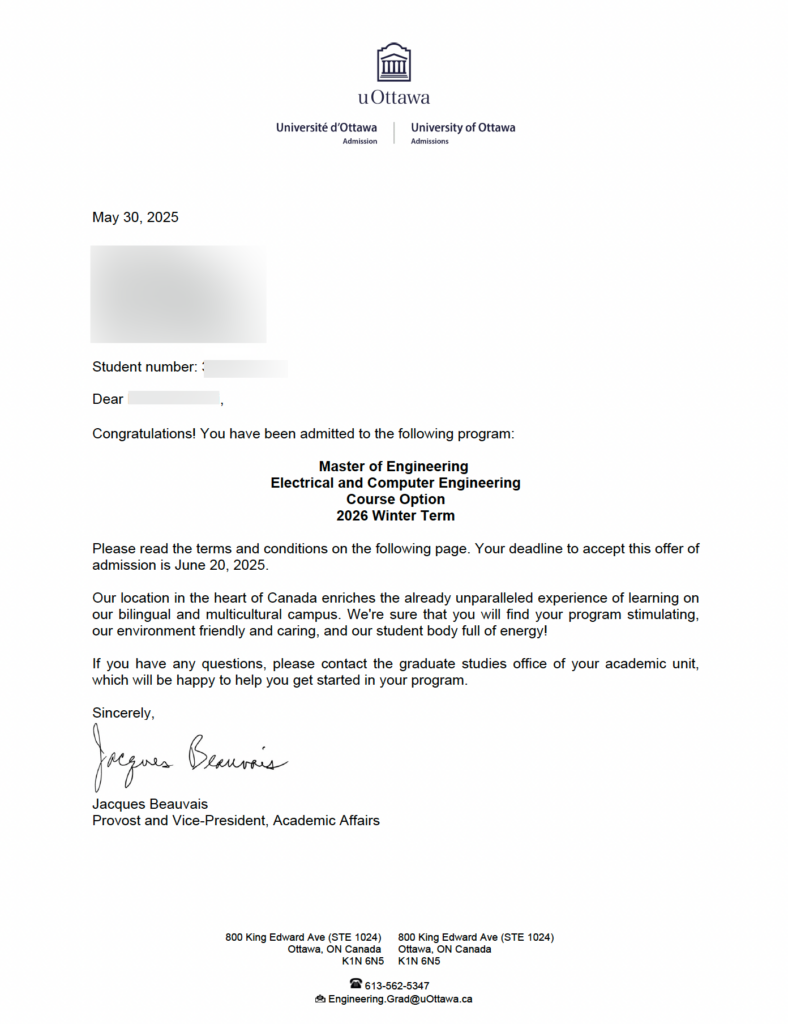
View a Sample Letter of Acceptance (LOA)
Below is a sample Letter of Acceptance (LOA) commonly used for Canadian Study Permit applications.
Search Canadian Colleges and Universities
Use this tool to search colleges and universities in Canada by institution name, province, city, address, phone number, or website.
[ez-toc title="Table of Contents"]

A Letter of Acceptance, often called an LOA, is an official admission document from a Canadian school. Most international students need this letter before they can apply for a Canada study permit.
Before submitting a Canada study permit application, students should confirm that their LOA is issued by an eligible institution, includes the correct program details, and matches the information in their passport and application forms.
What Is a Letter of Acceptance for Canada?
A Letter of Acceptance is a document issued by a Canadian educational institution to confirm that a student has been accepted into a specific program of study. It usually includes the student’s name, program name, start date, school details, tuition information, and any admission conditions.
The LOA is not a visa or a study permit. It is proof of admission. After receiving the letter, the student must still apply for a study permit and meet the immigration requirements set by Canadian authorities.
Why the LOA Matters for a Canada Study Permit
The LOA helps show that the applicant has a genuine academic reason to study in Canada. Immigration officers use it to verify the school, program, start date, and other study details.
A study permit application may be delayed or refused if the acceptance letter is missing, expired, incomplete, unclear, or issued by an institution that is not eligible to host international students.
Important:
An LOA does not guarantee study permit approval. The full application is still assessed, including proof of funds, study purpose, background, travel history, and supporting documents.
Who Can Issue a Valid LOA?
A valid LOA must come from a Canadian educational institution. For most post-secondary programs, the school must be a Designated Learning Institution, also known as a DLI.
A Designated Learning Institution (DLI) is a school approved by a provincial or territorial government to host international students.
Universities, colleges, language schools, private career colleges, and some secondary schools may be DLIs, depending on their approval status.
Students should check the school’s DLI status before applying, especially if they are planning to study at a college, private institution, or language school.
What Should Be Included in a Letter of Acceptance?
A proper Letter of Acceptance should include enough information for the student and immigration officer to confirm the admission details clearly.
- Student’s full legal name as shown on the passport
- Student ID number, if available
- Name of the Canadian school
- Designated Learning Institution number, if applicable
- Program name and level of study
- Campus location
- Program start date
- Expected completion date or program length
- Tuition fees and required deposit details
- Admission conditions, if any
- Deadline to accept the offer
- School contact information
- Official school confirmation, signature, or authorized format
If your name, date of birth, program name, or start date is incorrect, contact the school and request a corrected LOA before using it in your study permit application.
Conditional vs. Unconditional Letter of Acceptance
Some students receive a conditional LOA, while others receive an unconditional LOA. The difference is important because a conditional offer means the student still has requirements to complete.
Conditional LOA
A conditional LOA means the student has been accepted but must still meet one or more requirements. For example, the school may ask for final transcripts, proof of graduation, or updated language test results.
Unconditional LOA
An unconditional LOA means the student has met the admission requirements and has been fully accepted. There are no pending academic or language conditions.
If the LOA is conditional, read the conditions carefully. Missing a deadline or failing to submit required documents may cause the school to cancel or delay the admission.
How to Get a Letter of Acceptance for Canada
To get an LOA, you must apply to a Canadian educational institution and meet its admission requirements. The exact process can vary by school, program, and intake, but most students follow these steps.
1. Choose an Eligible Canadian Institution
Start by choosing a school that offers the program you want to study. If you are applying for post-secondary education, confirm that the school is a Designated Learning Institution.
When comparing schools, check the program content, tuition fees, admission requirements, campus location, refund policy, deferral policy, and support services for international students.
2. Review the Admission Requirements
Each program has its own entry requirements. Some programs require strong academic grades, language test results, prerequisite courses, work experience, a portfolio, or an interview.
Common admission documents include academic transcripts, certificates, passport copy, English or French language test results, resume, statement of purpose, letters of recommendation, and application fee receipt.
3. Prepare Complete and Accurate Documents
Prepare your documents before applying. Make sure your name is consistent across your passport, academic records, test results, and application forms.
If your documents are not in English or French, the school may require certified translations. Missing, unclear, or mismatched documents can delay the admission decision.
4. Submit the School Application
Most Canadian schools allow international students to apply online. You may need to create an account, select your program, upload documents, and pay an application fee.
Apply early, especially for popular intakes such as September, January, and May. Some programs close before the general deadline when seats are filled.
5. Receive an Admission Offer
If the school accepts your application, you will receive an offer of admission. This offer may be conditional or unconditional.
Review the offer before accepting it. Check the start date, program name, campus, tuition amount, deposit deadline, refund rules, and any conditions listed by the school.
6. Accept the Offer and Pay the Required Deposit
Many schools require students to accept the offer and pay a tuition deposit before issuing the final LOA. The deposit amount and payment deadline depend on the institution.
Before making payment, confirm that you are using the official payment method provided by the school. Keep the payment receipt because it may be useful for your study permit application.
7. Receive and Review the LOA
After you meet the school’s requirements, the institution will issue your Letter of Acceptance. Save a clear copy and review it carefully before uploading it to your study permit application.
If the program start date changes or you defer your admission to another intake, request an updated LOA from the school.
How to Use an LOA in a Canada Study Permit Application
Once you receive your LOA, include it with your study permit application. The details in your LOA should match your application forms, study plan, financial documents, and tuition payment records.
In addition to the LOA, students may need to provide other documents, such as:
- Valid passport
- Proof of financial support
- Provincial Attestation Letter or Territorial Attestation Letter, if required
- Study plan or statement of purpose
- Passport-size photo
- Proof of tuition payment, if available
- Medical exam, if required
- Police certificate, if requested
- Biometrics, if required
For example, if your LOA shows a two-year diploma in business, your study plan should explain why that program fits your academic background, career goals, and reason for studying in Canada.
Does an LOA Guarantee a Canada Study Permit?
No. A Letter of Acceptance does not guarantee study permit approval. It only confirms that a Canadian institution has accepted you into a program.
Immigration officers may still refuse an application if they are not satisfied with the applicant’s financial documents, study purpose, academic progression, immigration history, or intention to comply with study permit conditions.
Common LOA Mistakes to Avoid
Many LOA problems can be avoided by checking the document and school details before submitting a study permit application.
- Applying to a school without checking whether it can host international students
- Submitting an outdated LOA after changing or deferring the intake
- Using an LOA with spelling errors or passport name mismatches
- Ignoring conditional admission requirements
- Missing the tuition deposit deadline
- Not reviewing the school’s refund and deferral policies before payment
- Choosing a program that does not clearly connect with past education or career plans
- Uploading an offer email instead of the official Letter of Acceptance
How Long Does It Take to Get an LOA?
The time needed to receive an LOA depends on the school, program, intake, and quality of the application. Some schools issue admission decisions within a few weeks, while others may take longer.
Processing can take more time if the program is competitive, documents are missing, transcripts need verification, or the school receives a high number of applications.
Can International Students Change Schools in Canada?
Yes. International students may change schools, programs, or intakes after receiving a Letter of Acceptance (LOA) or even after arriving in Canada, provided the new institution is eligible to host international students.
In many situations, students may also need to update IRCC records, obtain a new LOA, or review whether their Study Permit conditions remain valid before changing institutions, programs, or study levels.
Changing Schools or Programs After Receiving an LOA
International students may sometimes decide to change schools, programs, or intakes after receiving a Letter of Acceptance (LOA) or after arriving in Canada.
Before making changes, students should confirm that the new institution is eligible to host international students and review whether their Study Permit conditions remain valid.
Depending on the situation, students may need:
- A new Letter of Acceptance (LOA)
- An updated DLI number
- IRCC account updates
- A Study Permit extension or modification
Students changing schools, study levels, or provinces should carefully review current IRCC requirements before making changes to their academic plans.
Practical Example
Suppose a student is accepted into a two-year business diploma at a Canadian college for the September intake. The LOA should show the correct student name, college name, DLI number if applicable, program title, campus, start date, tuition amount, and any conditions.
If the student later defers to January, the old September LOA should not be used without checking with the school. The student should request an updated LOA showing the new intake date.
Practical Example: Applying to a Toronto College Step by Step
For example, suppose an international student wants to study Business Administration at a public college in Toronto for the September intake.
The student would commonly follow these steps:
- Choose a Canadian Designated Learning Institution (DLI)
- Review tuition fees, PGWP eligibility, and admission requirements
- Prepare academic transcripts, passport, and language test results
- Submit the online school application and pay the application fee
- Receive a conditional or unconditional admission offer
- Pay the required tuition deposit if requested by the school
- Receive the official Letter of Acceptance (LOA)
- Prepare financial documents and a Study Permit application
- Complete biometrics and medical exams if required
- Wait for the final Study Permit decision before travelling to Canada
If the student later changes the intake from September to January, the original LOA should normally be updated before being used for immigration purposes.
Conclusion
A Letter of Acceptance is one of the key documents for international students applying for a Canada study permit. It proves that a Canadian institution has accepted the student into a program, but it does not replace the study permit application.
To get an LOA, choose an eligible Canadian school, review the admission requirements, submit complete documents, accept the offer, pay any required deposit, and check the final letter carefully. A clear and accurate LOA can support your study permit application and help avoid unnecessary delays.
This article provides general information only and should not be treated as legal or immigration advice. Students should always confirm current requirements with official Canadian immigration sources or a qualified professional.
Letter of Acceptance (LOA) FAQ
This FAQ section answers common questions about Letters of Acceptance (LOA), Canadian schools, Designated Learning Institutions (DLI), Study Permits, PGWP eligibility, tuition deposits, admission requirements, and international student applications in Canada.
What is a Letter of Acceptance (LOA) for Canada?
A Letter of Acceptance (LOA) is an official admission document issued by a Canadian school confirming that a student has been accepted into a program of study.
Is an LOA required for a Canada Study Permit?
Yes. Most international students need a valid LOA before applying for a Canadian Study Permit.
What is the difference between an LOA and a Study Permit?
An LOA confirms school admission, while a Study Permit is the immigration authorization allowing a student to study in Canada.
Who can issue a valid LOA in Canada?
A valid LOA is generally issued by a Canadian educational institution, usually a Designated Learning Institution (DLI).
What is a DLI in Canada?
A Designated Learning Institution (DLI) is a Canadian school approved to host international students.
Can I apply for a Study Permit without an LOA?
Most Study Permit applications require a valid LOA before submission.
What information should appear on an LOA?
An LOA commonly includes the student’s name, school name, program, tuition details, start date, campus, and admission conditions.
What is a conditional LOA?
A conditional LOA means the student has been accepted but must still satisfy additional requirements such as language results or final transcripts.
What is an unconditional LOA?
An unconditional LOA confirms the student has fully met the admission requirements.
Can I apply for a Study Permit with a conditional LOA?
In some situations, students may apply with a conditional LOA, although they should carefully review the admission conditions.
Does an LOA guarantee Study Permit approval?
No. Immigration officers still assess the full application, including finances, study purpose, and immigration compliance.
How do I get an LOA from a Canadian school?
Students usually obtain an LOA by applying to a Canadian institution, meeting admission requirements, and accepting the offer.
How long does it take to receive an LOA?
Admission timelines vary depending on the school, program, intake season, and application volume.
Can I defer my LOA to another intake?
Some Canadian schools allow students to defer admission to a later intake depending on institutional policies.
Do I need a new LOA after deferring admission?
Yes. Students commonly need an updated LOA showing the correct intake and program start date.
Can I change schools after receiving an LOA?
Yes. Students may change schools, although immigration and Study Permit update requirements should be reviewed carefully.
What happens if my LOA contains incorrect information?
Students should contact the school immediately and request a corrected LOA before submitting a Study Permit application.
Can online schools issue LOAs for Canada Study Permits?
Some eligible institutions may issue LOAs for online or hybrid programs, although immigration and PGWP rules should be reviewed carefully.
Do language schools issue LOAs?
Yes. Some Canadian language schools issue LOAs, although many language programs do not qualify for PGWP eligibility.
Do all Canadian colleges qualify for PGWP?
No. Not all institutions or programs qualify graduates for a Post-Graduation Work Permit (PGWP).
Should I check PGWP eligibility before accepting an LOA?
Yes. Students planning long-term immigration pathways should carefully review PGWP eligibility before choosing a school or program.
Can private colleges issue valid LOAs?
Some private colleges may issue valid LOAs if they have DLI status, although PGWP eligibility may differ.
What documents are commonly required to receive an LOA?
Schools may request transcripts, language test results, passport copies, resumes, statements of purpose, and application fees.
Do I need IELTS or English test results for an LOA?
Many Canadian schools require language test results such as IELTS, TOEFL, PTE, or Duolingo depending on the program.
Can mature students receive an LOA in Canada?
Yes. Mature students may qualify if the study plan demonstrates realistic educational and career progression.
Can family members accompany students after receiving an LOA?
In many situations, spouses and dependent children may later apply for accompanying immigration status.
Do Canadian universities require tuition deposits before issuing an LOA?
Some institutions require tuition deposits or confirmation fees before finalizing admission documents.
Can a weak LOA affect Study Permit approval?
Yes. Weak school selection, unrealistic programs, or poor academic progression may increase refusal risks.
What are common LOA mistakes?
Common mistakes include using outdated LOAs, name mismatches, missing conditions, incorrect start dates, or choosing non-eligible schools.
Can an LOA help with permanent residence pathways?
Studying in Canada may later support pathways such as PGWP, Express Entry, Provincial Nominee Programs (PNP), and Canadian work experience immigration streams.
Is professional guidance helpful before accepting an LOA?
Professional immigration guidance may help students select stronger institutions, review PGWP eligibility, and reduce Study Permit refusal risks.
Letter of Acceptance (LOA) and Canadian Study Permit Assessment
Students may begin by completing our online immigration assessment form to review possible LOA eligibility, DLI selection, academic background, Study Permit requirements, and long-term immigration pathway options.
For questions regarding Canadian colleges and universities, Letters of Acceptance (LOA), PGWP eligibility, Study Permit refusal risks, tuition planning, or permanent residence pathways after graduation, students may also contact us through WhatsApp.
Editorial and Professional Notice
This article was prepared for general informational purposes based on publicly available Canadian immigration laws, IRCC operational guidance, and current immigration policies.
At Borhanifar Immigration, we provide professional Canadian immigration services focused on clarity, strategy, and practical immigration solutions tailored to each client’s situation and long-term objectives.
Content on this page is reviewed under the supervision of a licensed Canadian immigration professional (RCIC). Immigration laws, policies, processing trends, and eligibility requirements may change over time, and readers should verify important information directly through official Government of Canada sources.
This article does not constitute individualized legal advice and should not be interpreted as a guarantee of approval, processing time, or immigration outcome.